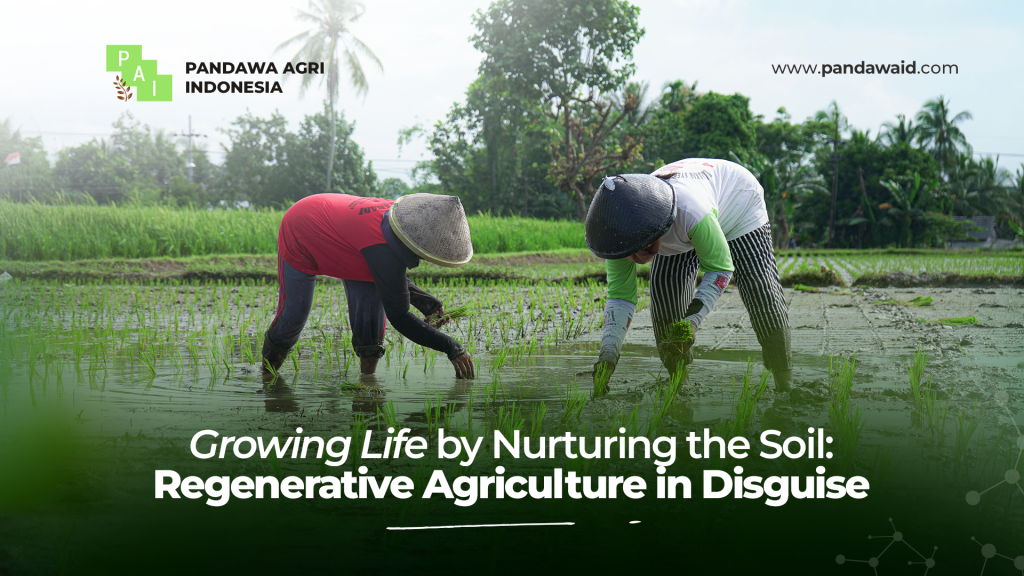
As much as we love nurturing plants by giving them fertilizers to prevent malnutrition, protecting them from pests with pesticides, and providing water to help them grow, all to achieve the highest yield and quality, these practices, when done excessively or inappropriately, can harm the soil in the long run. The soil itself is the home where plants live and grow.
If nurturing plants means nurturing their home, the soil, then this forms the core concept of Regenerative Agriculture: an approach that focuses on restoring and enhancing soil health, the very foundation of life and ecosystems. When the soil thrives, the entire ecosystem, including plants, can flourish.
The question is, how can we restore soil ecosystems to make them fertile again and naturally productive?
Regenerative agriculture not only aims for sustainability but also aligns with other sustainable and good agricultural practices such as organic farming, agroecology, and traditional systems that have long been practiced by our ancestors.
Historically, the term Regenerative Agriculture was first introduced academically by Francis and his team in 1986 through a paper titled “The Potential of Regenerative Agriculture in Developing Countries.” Decades later, in 2018, global attention toward regenerative agriculture surged following the release of the documentary “Kiss the Ground,” which highlighted how restoring soil health is essential to building a sustainable future food system.
Yet beyond this global momentum, regenerative agriculture is not new in Indonesia. Long before the term became popular, farmers across the archipelago had already been practicing it, protecting their land, restoring ecosystems, and using natural materials in line with local traditions to produce food sustainably.
Local Wisdom as the Inspiration for Regenerative Agriculture
In Bali, the traditional Subak irrigation system stands as a living example of harmony between nature, people, and culture. More than just managing water distribution efficiently and fairly, Subak instills social and spiritual values in natural resource management. For its uniqueness, Subak has been recognized by UNESCO as a World Cultural Heritage site, proof that balance between humans and the environment can create a truly sustainable and regenerative farming system.
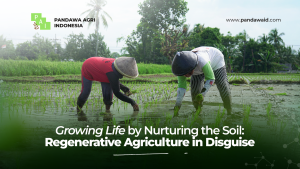
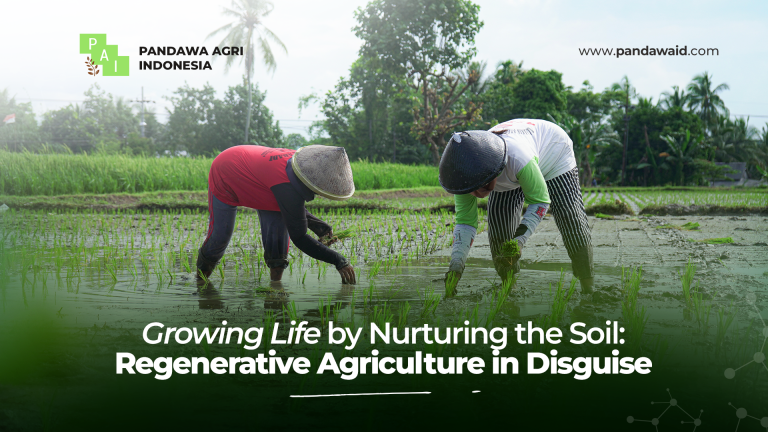
In Java, particularly in Banyuwangi, a similar concept is now being developed on a larger scale through the implementation of nature-based solutions. Through PPAI Technology®, smallholder rice farmers are adopting regenerative farming practices that include the use of soil conditioners (Balance Solution™), reduced synthetic pesticide use, and nutrient management tailored to plant needs.
To enhance resource efficiency, farmers also apply the Alternate Wetting and Drying (AWD) irrigation method, proven to save water and reduce methane emissions without decreasing productivity.
Moreover, instead of burning rice straw, farmers now compost it using straw decomposers, returning organic nutrients to the soil and enriching microbial life. It is a small step with a significant long-term impact on soil fertility.
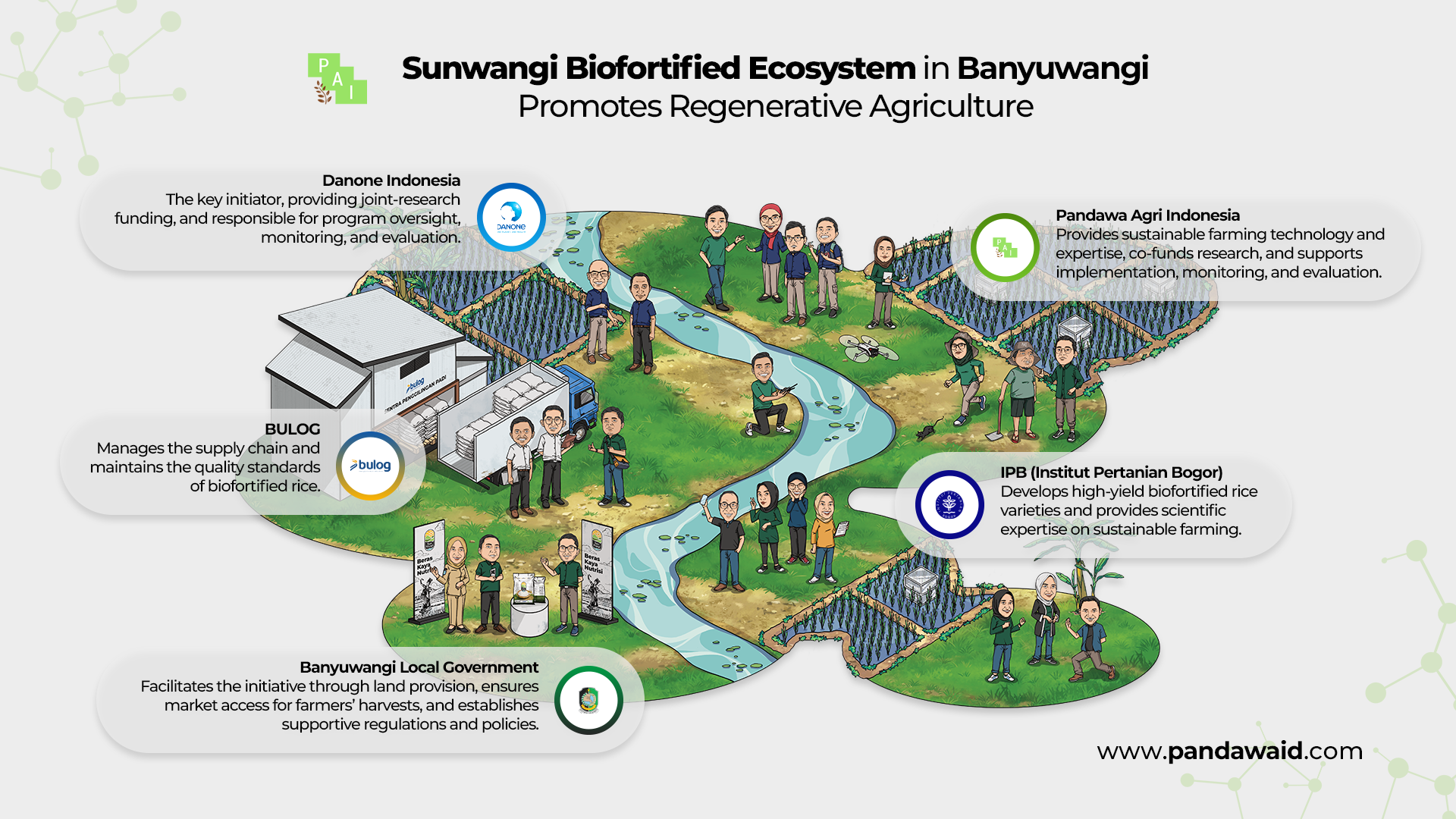
This mission to expand regenerative farming practices in Banyuwangi is carried out through collaboration among multiple stakeholders: the Banyuwangi Regency Government, IPB University, BULOG, Danone Indonesia, and Pandawa Agri Indonesia. Together, they are building the Sunwangi biofortified rice value chain, rice with up to three times higher nutrient content than conventional rice, produced regeneratively and consumed by local communities.
Defining the Direction of Indonesia’s Agriculture
The initiatives of farmers in Bali and Banyuwangi prove that regenerative agriculture is not merely a concept but a real, practical, and impactful approach that benefits farmers, the environment, and society alike.
The momentum is already here. The challenge is no longer how to adopt regenerative practices but how to help more people understand their importance.
Keywords: Regenerative agriculture, nature-based solutions, history of regenerative agriculture, soil restoration, PPAI Technology®