
Banyuwangi, November 26 — Pandawa Agri Indonesia (PAI), the world’s first life science-based company innovating in pesticide reductant technology, has released its 2024 Sustainability Report, showcasing how the company is redefining agriculture through science, innovation, and purpose-driven partnerships.
With the theme “Strengthening Sustainable Impact,” this year’s report highlights how PAI is transforming agricultural systems: making them more resilient, inclusive, and regenerative across both plantations and smallholder ecosystems.
Pandawa Agri Indonesia – Sustainability Report 2024 Strengthening Sustainable Impact
Our 2024 Sustainability Report shows how we are moving from small-scale pilots to truly scalable ecosystem-driven transformation using science, innovation, and strong partnerships to reshape agriculture, with Banyuwangi as our proof of what long-term impact looks like. We also highlight our commitment to regenerative technologies, reduced chemical dependency, and a redefined vision of agricultural progress that unites productivity, sustainability, and farmer prosperity.
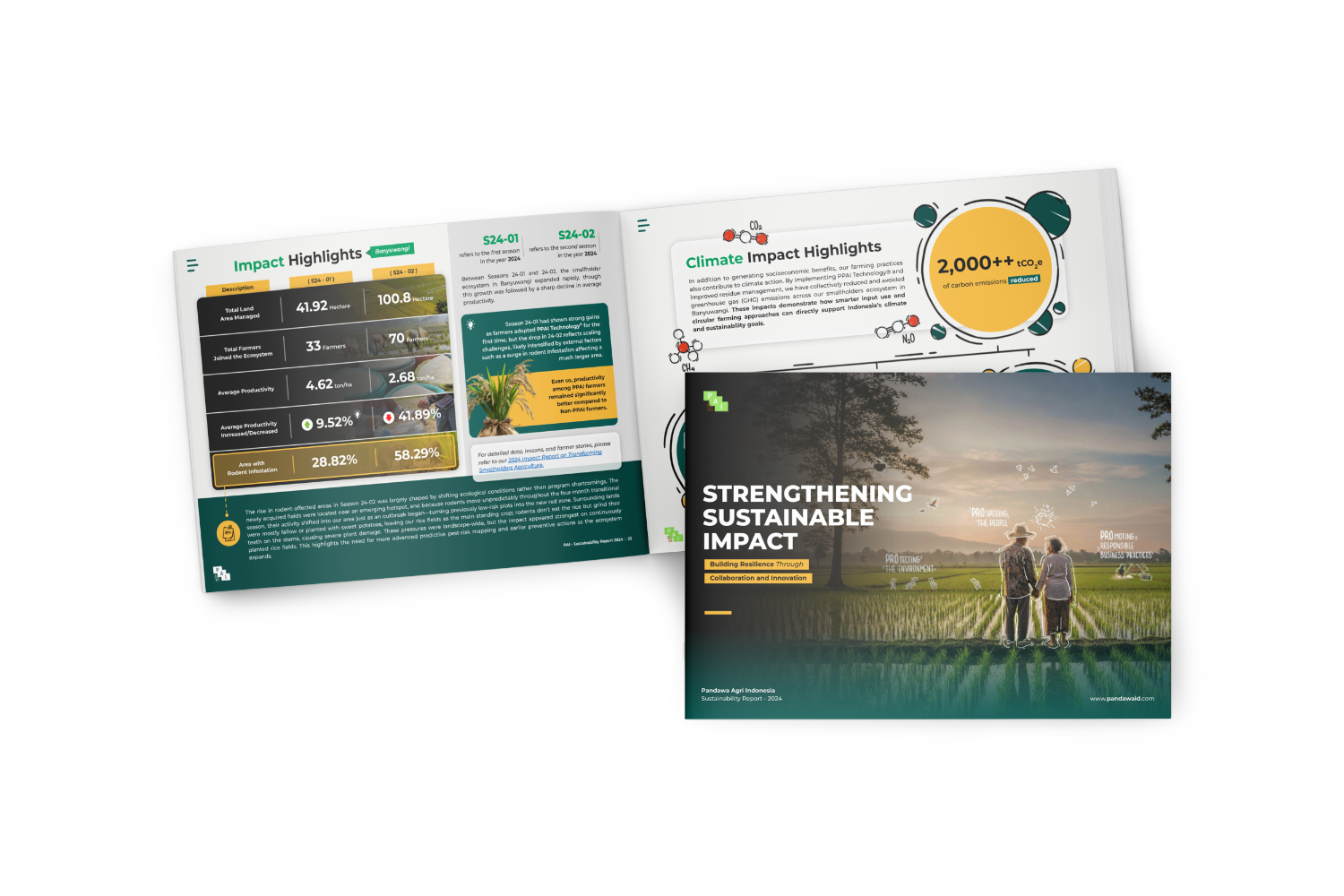
Inside our 2024 Sustainability Report, you will discover:
Over the past few years, Pandawa Agri Indonesia has tested various models of smallholder empowerment across Indonesia—each providing valuable insights into what truly drives sustainable transformation. Programs in Nagekeo and Pagar Alam demonstrated clear productivity gains but also revealed deeper structural challenges: limited access to finance, inconsistent farmer engagement, and the need for stronger institutional collaboration.
These lessons became the foundation of PAI’s new strategic direction: focusing resources on regions with the greatest potential for long-term impact. This approach took root in Banyuwangi, East Java, where the convergence of fertile land, strong local leadership, and forward-looking farmers has created a living model of scalable sustainability.
Here, PAI has built an integrated rice ecosystem that combines science-based innovation, institutional partnership, and community development. Through collaboration with Danone Indonesia, Bulog, and the Banyuwangi Government, the company is pioneering a new standard for smallholder farming—one that links productivity, sustainability, and nutrition within a single, cohesive system.

“Banyuwangi shows what’s possible when innovation meets the right ecosystem,” said Kukuh Roxa, CEO and Co-founder of Pandawa Agri Indonesia. “It’s where technology, governance, and farmer resilience come together to create lasting value for people and the planet.”
This sharper focus represents more than a geographical shift; it marks a deeper organizational maturity. By consolidating its efforts, PAI is moving from experimentation to scale, demonstrating that sustainability in agriculture is not achieved through isolated projects, but through ecosystems built on trust, science, and shared purpose.
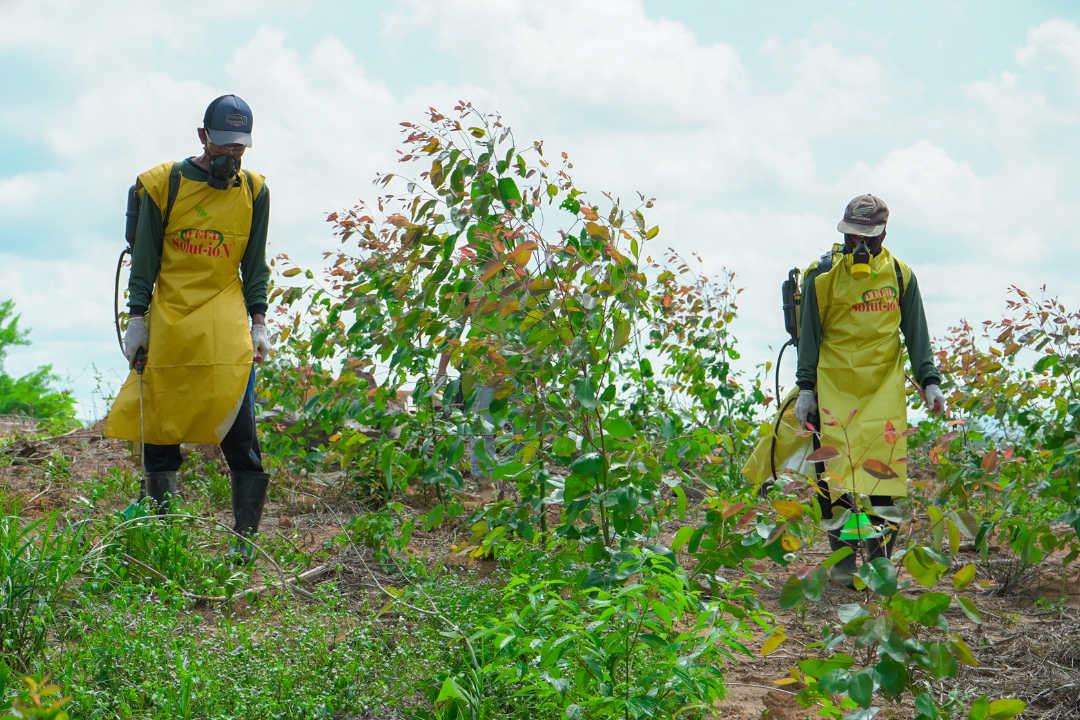
At the heart of PAI’s sustainability journey lies a simple conviction: that science can—and must—serve both productivity and the planet. The company’s pioneering pesticide reductant technology and its biochar-based Balance Solution™ are now helping plantations across Indonesia and Malaysia reduce chemical dependency, lower emissions, and protect biodiversity without compromising yields.
These innovations also underpin PAI’s broader contribution to climate and sustainability goals. Reinforced by international validations such as ISO 9001 certification and B Corporation recognition, PAI continues to prove that responsible innovation can be both credible and commercially viable.
“Our mission is to make sustainability scalable,” Kukuh added. “The more our solutions are adopted, the greater the shared impact across communities, value chains, and ecosystems.”
As detailed in its 2024 Sustainability Report, Pandawa Agri Indonesia is entering a new phase—one centered on expanding its regenerative technologies, strengthening collaboration with governments and industry partners, and deepening environmental transparency across its value chain.
Rather than merely reducing harm, PAI seeks to redefine what progress means in agriculture—from chemical efficiency and soil restoration to farmer livelihoods and food nutrition. The company’s vision is clear: a future where innovation and integrity work hand in hand to cultivate prosperity that endures.
About Pandawa Agri Indonesia
Pandawa Agri Indonesia is Indonesian agri life-science company and is currently the only one that has innovation in the development of pesticide-reducing products (pesticide reductants). Starting from this innovation, Pandawa Agri Indonesia is committed to helping agricultural business actors to implement agricultural practices that are sustainable, environmentally friendly, safe for users, and also cost-efficient.
For more information visit www.pandawaid.com.
For media enquiries, please contact:
Junia Anindya
Corporate Sustainability and Communications
Pandawa Agri Indonesia
junia@pandawaid.com
+62 81-351-670-869



We use cookies to give you the best experience when you visit pandawaid.com. By using our website you agree to our Terms and Conditions and Privacy Policy