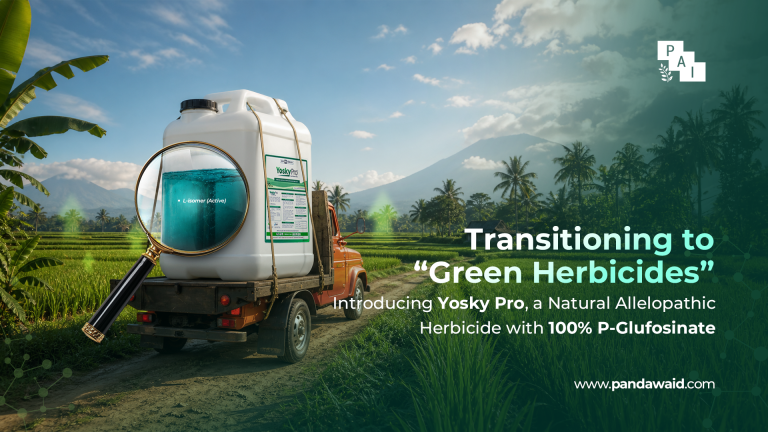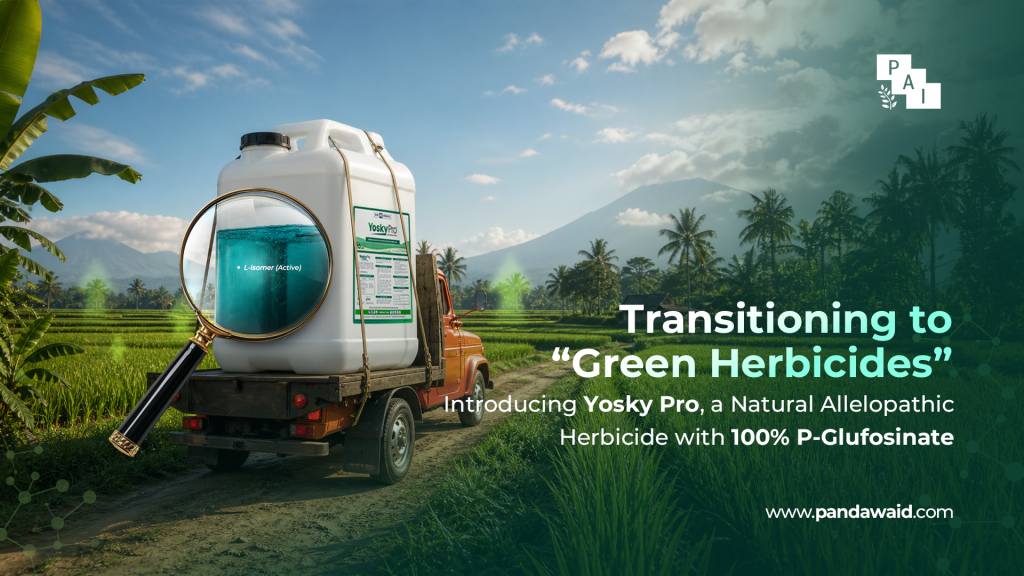
Transitioning to “Green Herbicides”: Introducing Yosky Pro, a Natural Allelopathic Herbicide with 100% P-Glufosinate
The challenges in weed management are becoming more apparent every day. Land managers are struggling with weeds that rapidly grow back (regrowth) after Paraquat application, alongside the rising risk of weed resistance to Glyphosate.
To make things more challenging, global regulations are tightening. For instance, conventional Ammonium Glufosinate is now restricted under the Forest Stewardship Council (FSC) certification standards. This means land managers who follow FSC standards must prioritize more eco-friendly alternatives.
This is where P-Glufosinate steps in as the ultimate answer. But what exactly sets it apart from conventional herbicides?
What Makes P-Glufosinate Different?
When introducing P-Glufosinate as a green herbicide alternative, the most common question we get is: “What is the difference between P-Glufosinate and conventional Ammonium Glufosinate?”
Even though they share a similar name, they are fundamentally different. There are three major differences: isomer composition, the production process, and the risk of chiral pollution.
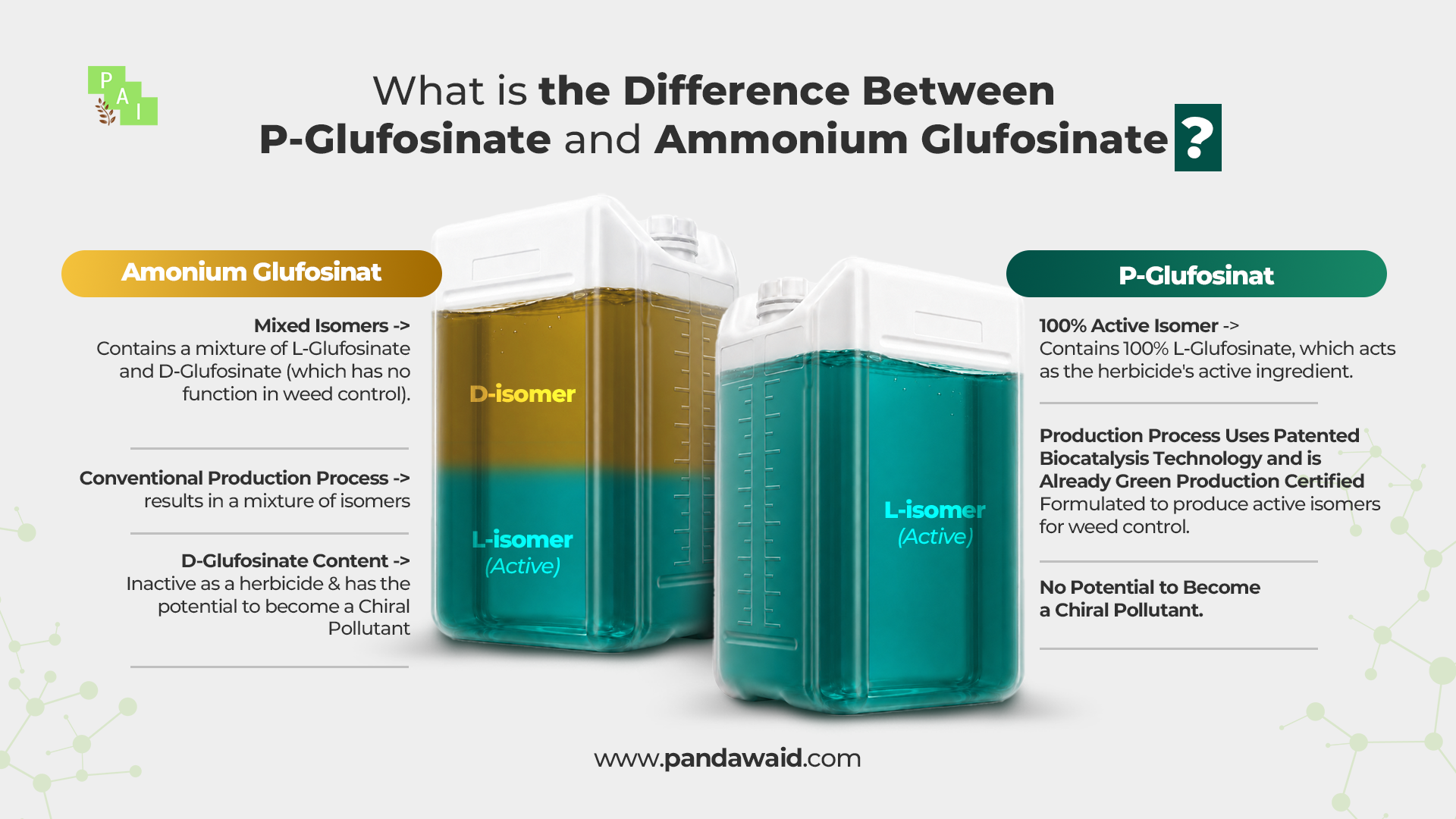
The isomer content in P-Glufosinate contains 100% active isomers. Meanwhile, based on our findings, conventional Ammonium Glufosinate circulating in the market generally contains a mixture of isomers (racemic) with different concentrations depending on the brand. This difference in isomer purity is the key determinant of herbicide efficacy and performance.
100% Active Isomer vs. Mixed Isomers
An isomer is a molecule that shares the same chemical formula but has a different spatial structure. Think of them like two keys that look identical, but only one can actually unlock the door.
In glufosinate, these two “keys” are:
- L-glufosinate: The “key that works.” This is the active isomer that directly controls weeds.
- D-glufosinate: The “wrong key.” This isomer is completely inactive against weeds and ends up as waste in the environment.
Patented Biocatalysis Technology
Behind the 100% active isomer content in P-Glufosinate, there is a production process utilizing the innovative, patented Biocatalysis Technology. This advanced technology is specifically engineered to synthesize only the active isomer required for effective weed control. Due to this exclusive innovation, true P-Glufosinate cannot be easily replicated, and you won’t find generic versions of it on the market.
Meanwhile, in conventional processes that produce a mixture of isomers, there is a portion that technically does not work actively in the weed control process on the land.
Eliminating Chiral Pollution
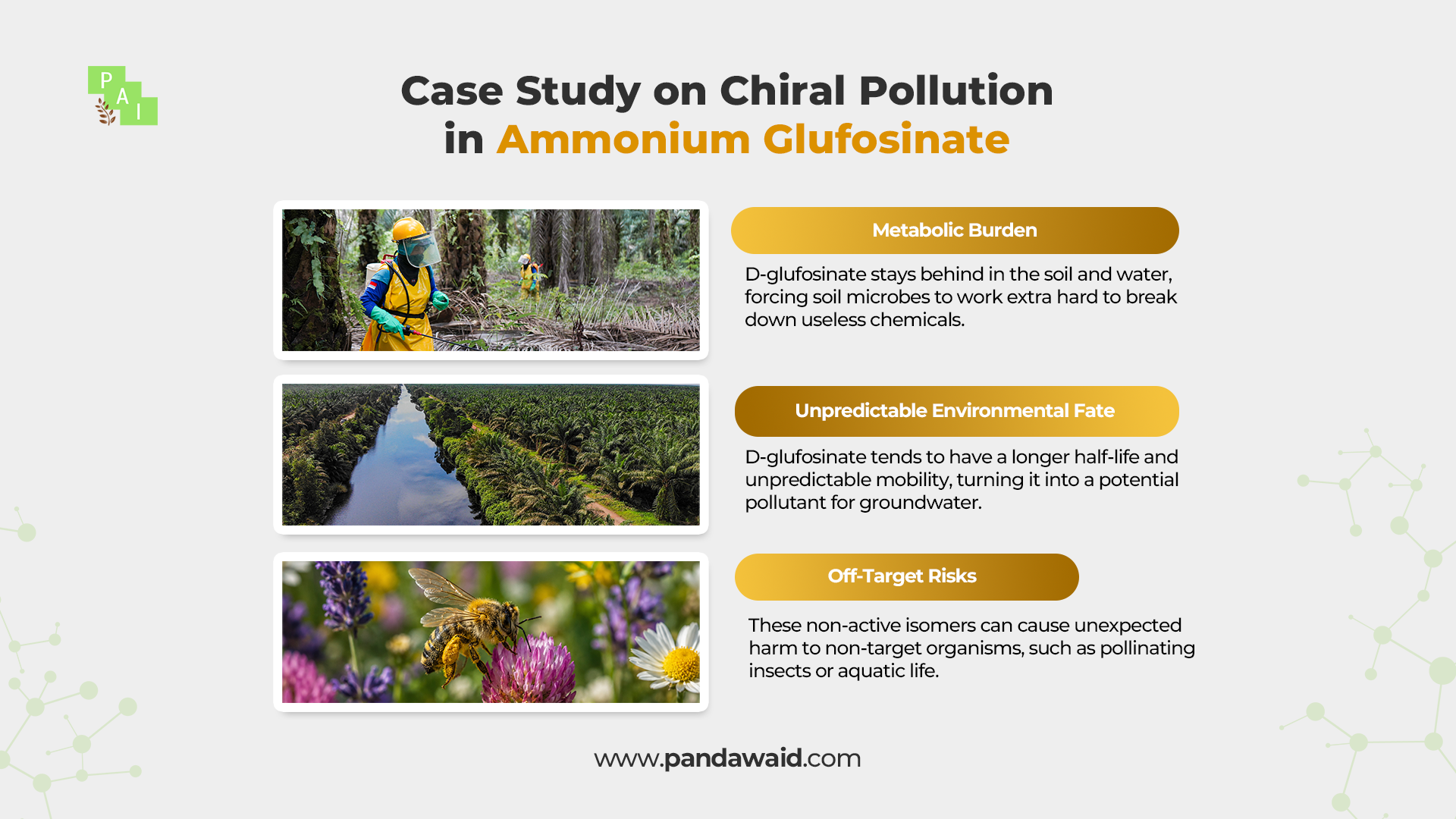
Because conventional Ammonium Glufosinate contains inactive D-glufosinate, it triggers a phenomenon known as chiral pollution. This refers to environmental contamination caused by inactive isomer residues that serve no purpose in weed control.
Using mixed herbicides means spraying twice as many chemical residues into nature than necessary. The impacts of chiral pollution include: metabolic burden, unpredictable environmental fate, and off-target risks. By utilizing a 100% active isomer formula, P-Glufosinate works completely and cleanly, leaving no unnecessary chemical burden behind.
Meet Yosky Pro: Pandawa Agri’s Sustainable Agriculture Solution
To address these environmental burdens, Pandawa Agri Indonesia has introduced a more efficient approach through Yosky Pro P-Glufosinate 200 SL.
What does the “P” stand for? Simply put, ‘P’ means Pure (Murni). While conventional choices leave a trail of inactive ingredients, Yosky Pro contains only 100% pure L-glufosinate.
By focusing on this purity, Yosky Pro ensures maximum field performance while eliminating non-active isomers that would only become chiral pollutants for the environment.
Currently, Yosky Pro is the only natural allelopathic herbicide produced from the fermentation process of secondary metabolites by the soil microorganism Streptomyces sp. Developed using patented multi-enzyme biocatalysis technology. This formulation is designed not only to provide consistent performance but also to consider aspects of environmental sustainability.
How It Works (Mechanism of Action)
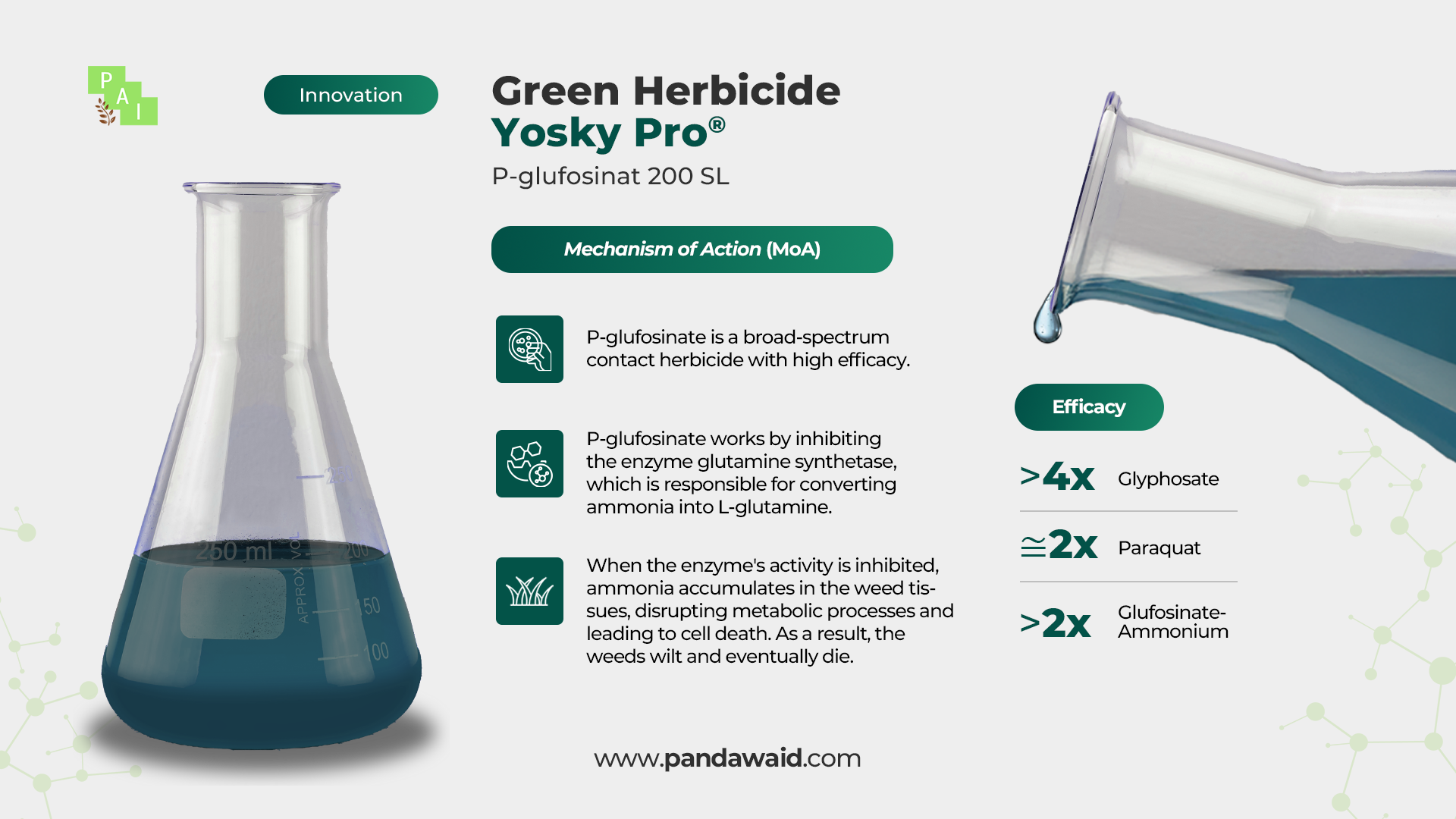
Yosky Pro is a broad-spectrum, contact herbicide with systemic properties. It works by inhibiting the glutamine synthetase enzyme, which stops the plant from converting ammonia into L-glutamine. When this enzyme is blocked, ammonia builds up rapidly inside the weed’s tissues, disrupting its metabolism, destroying plant cells, and causing the weed to wither and die.
In terms of performance, Yosky Pro 200 SL is proven to be:
- >4x more effective than Glyphosate.
- 2x stronger than Paraquat.
- >2x more efficient than conventional Ammonium Glufosinate.
Safer for the User, Safer for the Planet
Beyond high performance, our team has conducted in-depth research demonstrating that Yosky Pro offers an outstanding safety profile compared to conventional alternatives:
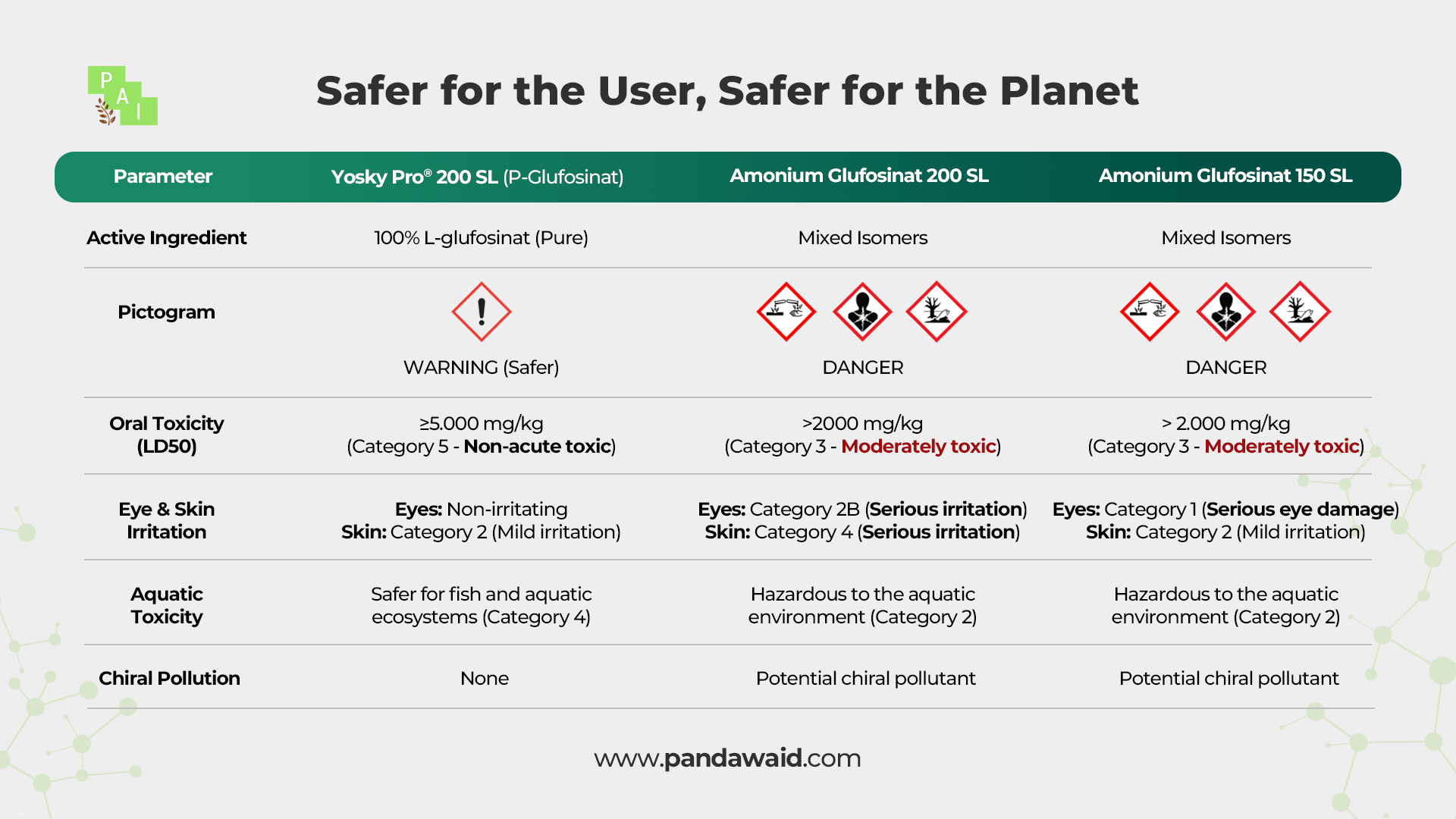
Yosky Pro has officially received green certification from the China Green Food Association, making it approved for use in responsible and organic farming systems.
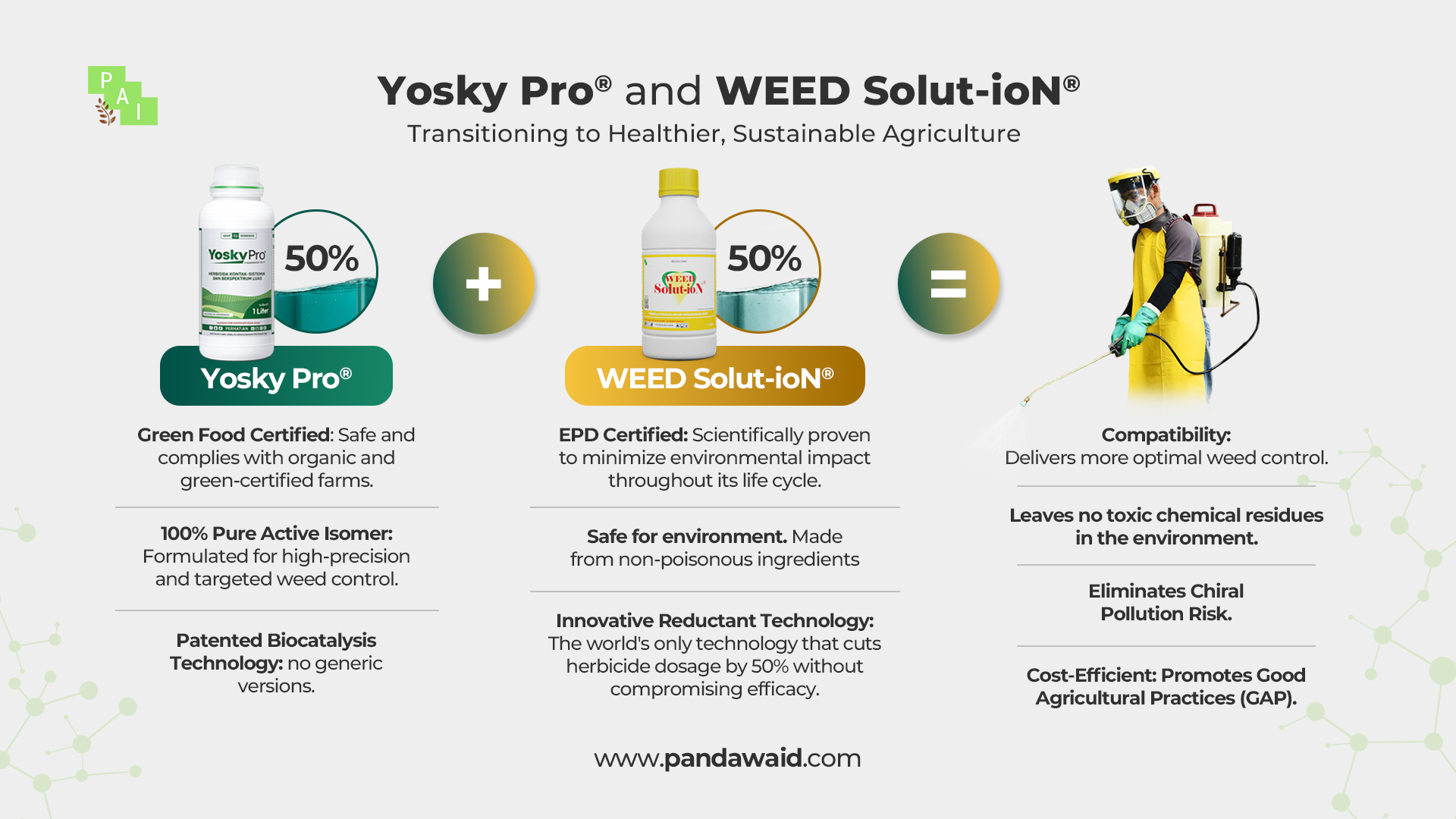
Less Dosage, Better Results
For agricultural sectors aiming for true sustainability, Yosky Pro can be seamlessly combined with WEED Solut-ioN®, Pandawa Agri’s flagship reductant technology. This combination allows plantation managers to reduce total herbicide use by up to 50% without sacrificing efficacy.
By reducing application volume, the logistics of chemical handling, storage, and transport become significantly leaner. It simplifies operational management while keeping weed control highly cost-effective, even in challenging field conditions.
The transition to a greener future is already here in Indonesia through Yosky Pro® 200 SL and Yosky 116 SL. With high-purity standards, these products are ready to help you switch to a cleaner, more efficient, and sustainable weed control system. Contact the Pandawa Agri team today to find the perfect, sustainable solution for your land.
References:
Ageruo. (2023, January 9). Glufosinate-p, a new driving force for the development of the future market of biocide herbicides. https://www.ageruo.com/news/glufosinate-p-a-new-driving-force-for-the-development-of-the-future-market-of-biocide-herbicides/
Ali, I., Aboul-Enein, H. Y., Sanagi, M. M., & Aini, W. (2012). Chirality and its role in environmental toxicology. In EXS (pp. 413–436). https://doi.org/10.1007/978-3-7643-8340-4_14
ECHEMI. (2023, February 2). Yongnong Biological sprints the world’s largest producer of glufosinate-ammonium project. https://www.echemi.com/cms/1202555.html
Pun, Á., Valimaña-Traverso, J., García, M. Á., Marina, M. L., Esteve-Núñez, A., & Boltes, K. (2025). Enhanced removal of chiral emerging contaminants by an electroactive biofilter. Environmental Science and Ecotechnology, 23, 100500. https://doi.org/10.1016/j.ese.2024.100500
Yonon Bio. (n.d.). Yonon Bio official website. https://www.yononbio.com/
Zhao, X., Fu, K., Xiang, K., Wang, L., Zhang, Y., & Luo, Y. (2023). Comparison of the chronic and multigenerational toxicity of racemic glufosinate and L-glufosinate to Caenorhabditis elegans at environmental concentrations. Chemosphere, 316, 137863. https://doi.org/10.1016/j.chemosphere.2023.137863
Zhou, W., Li, M., & Achal, V. (2024). A comprehensive review on environmental and human health impacts of chemical pesticide usage. Emerging Contaminants, 11(1), 100410. https://doi.org/10.1016/j.emcon.2024.100410
About Pandawa Agri Indonesia
Pandawa Agri Indonesia is Indonesian agri life-science company and is currently the only one that has innovation in the development of pesticide-reducing products (pesticide reductants). Starting from this innovation, Pandawa Agri Indonesia is committed to helping agricultural business actors to implement agricultural practices that are sustainable, environmentally friendly, safe for users, and also cost-efficient.
For more information visit www.pandawaid.com.